
- Home
- SEO for retail stores
Retail
SEO for Brick & Mortar Retail: Turning Online Searches Into In-Store Visits
Physical stores own something e-commerce never will: real geographic proximity to the shopper.
A built-in advantage
Your Store’s Address Is an Algorithmic Asset
“Near me” retail searches convert into visits within hours, sometimes minutes. Google wants to connect local shoppers to physical inventory.
For most independent retailers that advantage is completely wasted. Storefront SEO needs a different architecture from a service-area business: you have a fixed location, and nearby shoppers are searching for the exact high-ticket items you carry.
If your inventory and entity data are not configured for Google’s local systems you are invisible to someone standing three blocks away. Our specialists execute full-stack local SEO built to bridge digital discovery and physical foot traffic.
A configuration problem
The Invisible Specialty Store
They existed in the physical world, but not in Google’s. It was not a content problem. It was a configuration problem.
Yonatan Ben Moshe — Founder & CEO
Picture a specialty home goods store: solid inventory, eight years in the same location, five-star reviews. Someone a few blocks away searches for a brand of cookware it carries, and the store does not appear.
A single generic category
The profile was set to “Store” and nothing more, so it competed for everything and matched nothing in particular.
No product schema
Nothing in the site code told Google what inventory was actually stocked, which is the structured data local systems read first.
An inconsistently formatted address
The same location written several ways across the web, which weakens the entity precisely where proximity should be strongest.
Rebuild the architecture, add product schema, push the relevance radius outward. The store does not change; Google’s understanding of the store changes.
AI search
AI Search and the Modern Retail Shopper
High-intent buyers now ask where the highest-rated store near them carrying a specific brand is, rather than typing a keyword.
Proximity alone does not earn a citation from an AI engine — entity consensus does. Our retainers integrate advanced Generative Engine Optimization.
Deploying exact Product, LocalBusiness and AggregateRating JSON-LD translates physical inventory into structured data, so a language model can recommend your store as the local destination rather than defaulting to a national retailer.
Service area
Expanding Your Footprint Without Toxic Doorway Pages
Stores naturally want shoppers from surrounding affluent suburbs, and that is where thin “retail store in [suburb]” pages get sold.
Google penalises that spam, and persuading an algorithm that a single-location store physically exists in twenty cities is a fast route to a manual action.
We build deep regional hubs detailing product lines and areas contextually, paired with digital PR and off-page link building, so one location can draw from an entire metro region.
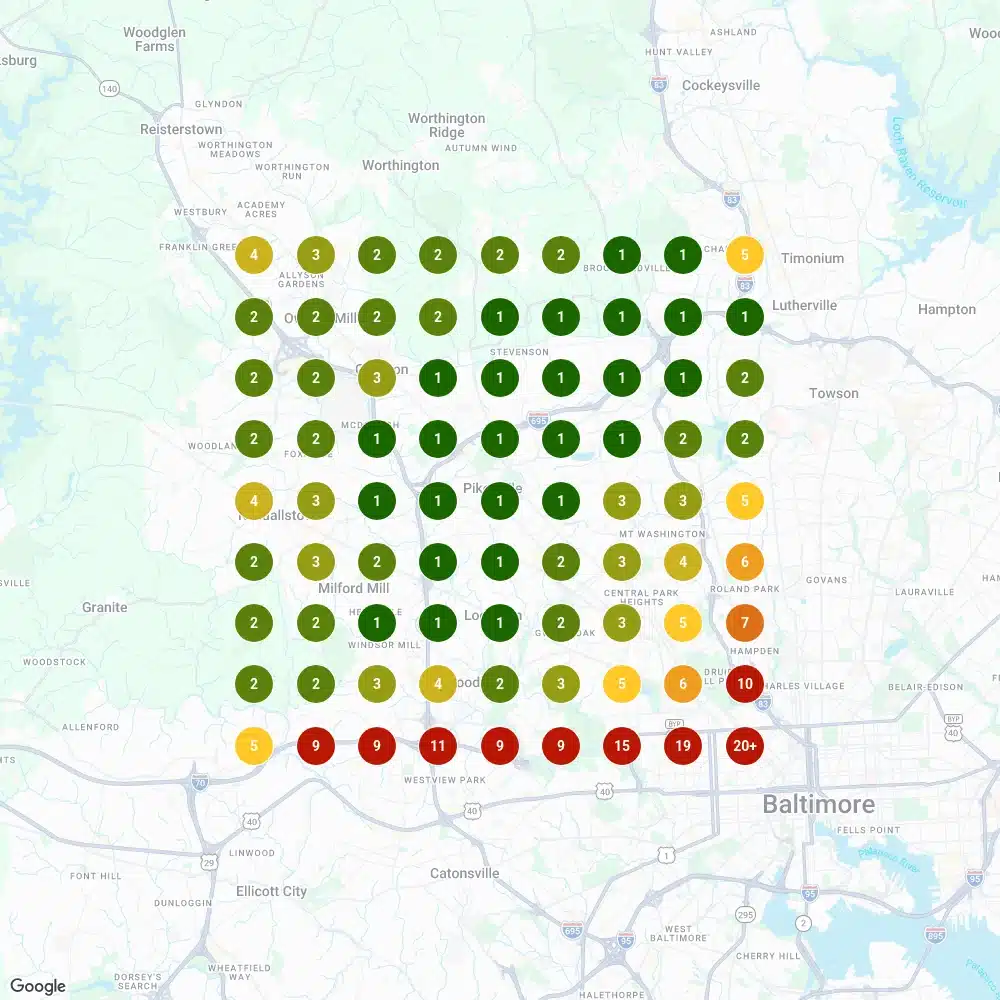
We measure it with directional requests, organic call tracking and before-and-after GEO-grid heatmaps rather than impressions — if the work succeeds, the register rings.
Related
Where this fits in the rest of the campaign
Our work
A Single-Location Retailer, Measured
One storefront, a five-mile catchment, and two head terms taken to market leader.
Turn Proximity Into Profit
The shoppers nearby are already searching. Stop losing local foot traffic to big-box chains and online retailers with better structured data. Tell us your location and category and we will run a live competitive gap analysis.